

As TÜBİTAK UZAY Space Technologies Research Institute, we guarantee the success of your space missions with our next-generation Attitude and Orbit Control Subsystem (AOCS) solutions, which deliver superior performance for satellites carrying advanced technology payloads. Our AOCS technology, combining innovation, precision, and reliability, forms the foundation of your critical space operations by providing seamless control from launch to end-of-life.
Our Comprehensive AOCS Capabilities
End-to-End System Development:
Advanced Control Technologies:
Modular and Reliable Infrastructure:
Comprehensive Analysis and Support:
Equipment Development:
With our AOCS technology, which delivers the precision, flexibility, and reliability demanded by next-generation satellite missions at the highest level, we shape your success in space together.
The Star Tracker is a robust and modular opto-electronic sensor compatible with different space orbits. Thanks to it's modular structure, it satisfies attitude determination needs of different Attittude and Orbit Control Systems (AOCS).
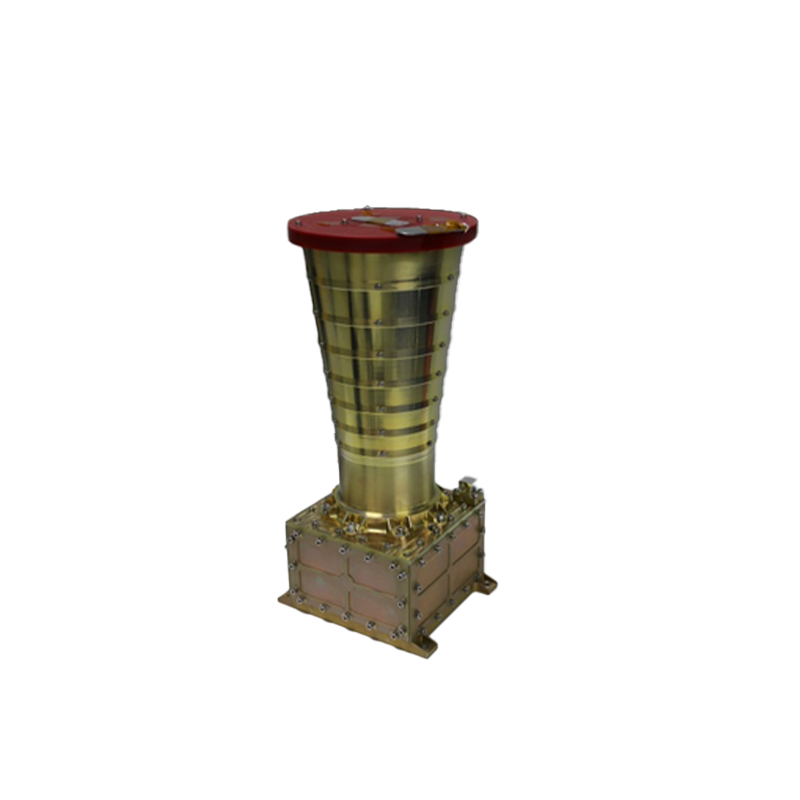
Spherical lenses, rad-hard glass material
70 mm focal length, f/1.4
15 x 15 degree field of view
Light curtain protecting the sensor from unwanted light (from the Sun and Earth)
Radiation tolerant APS CMOS HAS-2 sensor, 1.024 x 1.024 sensor resolution
Supply: Power supply is provided through the electronic unit.
Power Power supply is provided through the electronic unit.
Size: 159 mm x 130 mm x 343mm (W x L x H)
Weight: 3 kg
Dual Core, High Reliable LEON3FT Based Microprocessor
RTEMS Real Time Operating System
CCSDS and ESCC Compatible TM-TC
Bootloader, Drivers and Board Support Packages, Star Tracker Software
8 MB SRAM, 256 MB SDRAM, 2 MB PROM (All ECC protected)
Supply: 28V nominal (16V - 40V Input voltage range)
Power: 20W (nominal)
Dimensions: 308 mm x 279 mm x 148 mm (W x L x H)
Mass: 7.3 kg
3 x 2 SpaceWire
3 x 2 Power and Time Synchronization Interface (RS-422)
Bus: 2 x 2 CAN
2 x 1 JTAG
Synchronization : 2 x 2 PPS Input (RS-422)
Power Interface : 2 x 2 Main Power Input
IMECE, TURKSAT 6A
Thermal:-20 to +50 C
Vibration
Shock
EMI/EMC: MIL-STD-461
Lifetime: 5 to 15 years
SEU tolerant
Latchup Immune
The Sun Sensor is an instrument to detect the position of the Sun to be used for attitude control in satellites. They are especially important during the launch and early orbit phase, emergency cases and in case attitude determination sensors like star trackers does not operate correctly.
The Sun Sensors make use of various analog or digital detectors to indicate the Sun angle vector typically with low accuracy. Our domestically developed the Sun Sensor is a fully digital, high-performant, high accuracy instrument that is tolerant to harsh environmental conditions.
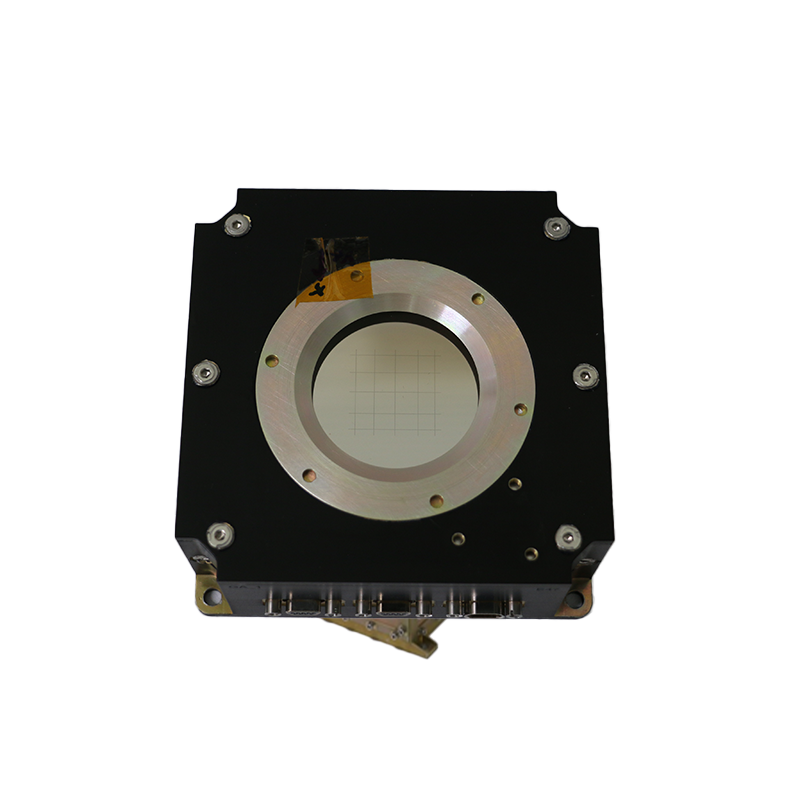
Electronical processing unit with high reliability
Internal Temperature Monitoring
Internal Current and Voltage Monitoring
Redundant data bus
FDIR enabled algorithm
Supply: 28V (IMECE), 100V (TURKSAT 6A)
Power: 3.2 W (IMECE); 3.7 W (TURKSAT 6A)
Size: 100 x 100 x 40 mm (IMECE), 124 x 106 x 42 mm (TURKSAT 6A)
Weight: 550 g (IMECE), 800 g (TURKSAT 6A)
TM-TC : 2 x CAN ISO (warm redundant)
Pin redundant power interface
IMECE, TURKSAT 6A
Thermal:-20 to +50 C
EMI/EMC: MIL-STD-461
Lifetime: 5 to 15 years
SEU tolerant
Latchup Immune
| Parameter | Value |
|---|---|
| Position Accuracy (m, % 90 SEP) | < 10 |
| Speed Accuracy (m/sec, % 90 SEP) | < 0,01 |
| Time Accuracy (nsec) | < 500 |
| PVT Solution Algorithms | Least Squares, Kalman Filter (Main) |
| Full Convergence After Cold Start | < 1.5 Orbit |
| Possible GNSS Signals |
GPS L1 C/A, L2C, L5 I/Q GALILEO E1 B/C, E5a I/Q |
| Total Channel Number | 36 |
| Measurement Data from Each Channel | Code Phase, Carrier Phase, Pseudorange, Doppler, C/N0 |
| Solution Performance Data | GDOP, Number of Satellites |
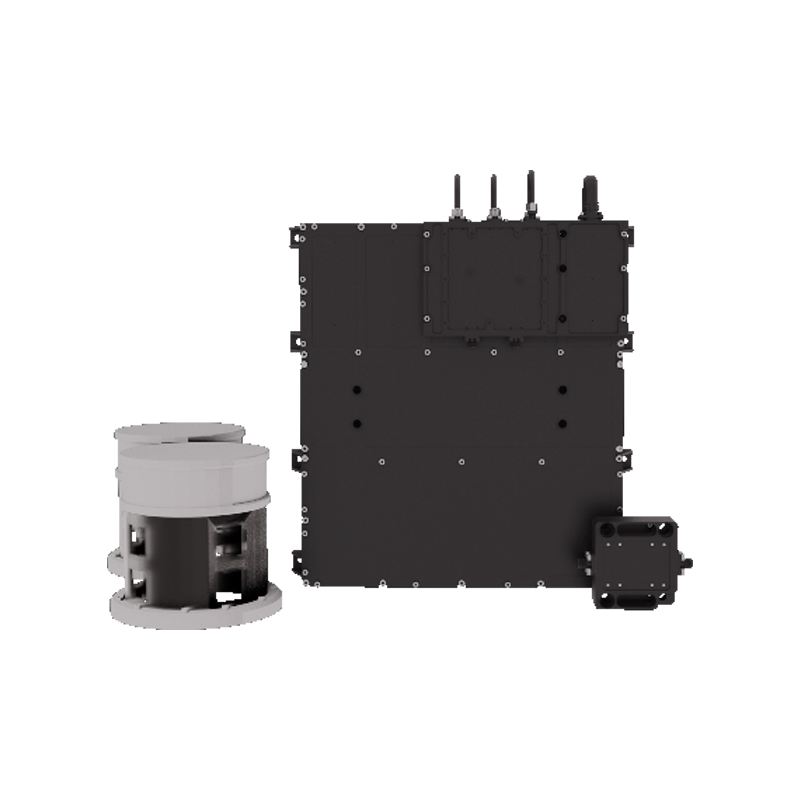
| Configuration | 2 x Antennas (Ant.) 2 x LNAs 1 x Electronic Unit (EU) |
| Effective Antenna Field of View (°) | 140 |
| Minimum Visible Satellites in LEO | 4 |
| Mass (kg) |
Antenna: 0.5 LNA: 0.1 EU: 3.8 |
| Dimensions (mm) |
Antenna < Φ 165, 70 LNA < 55 x 40 x 20 EU < 300 x 300 x100 |
| Input Voltage (V) | 28 ± 5 |
| Max. Power Consumption (W) | < 15 |
| Data Interface | MIL-STD-1553 |
| PPS Interface | RS422 |
| Other Features | An embedded radiation dosimeter is available |
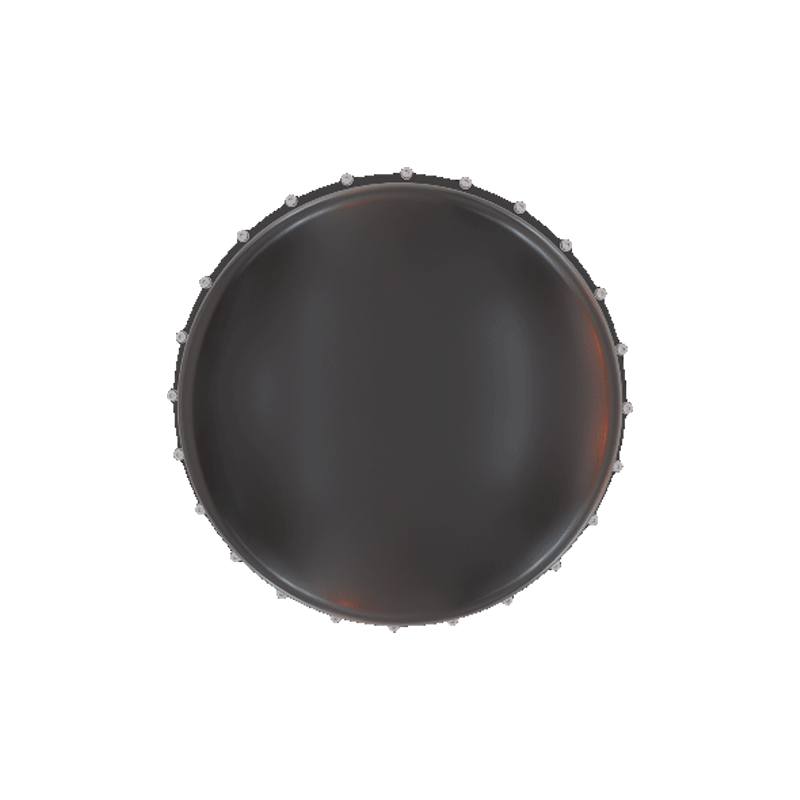
Reaction Wheels are momentum changing components, which are comprised of a high inertia rotor (flywheel) coupled to an electric motor and are used for the precision control of attitude and stabilization of satellites. Reaction Wheels must not only provide the precise attitude control but also operate almost without interruption during the satellite's lifetime. Therefore, the lifetime of the the spacecraft generally depends on the performance of the reaction wheels. Usually, four Reaction Wheels (for redundancy purposes) are required to control the spacecraft in 3-axis.
Orientation control and stability in three axes can be achieved by using multiple (usually 4, at least 3) Reaction Wheels.
The Reaction Wheel, developed by TUBİTAK UZAY, provides satisfying performance in terms of momentum storage, torque, and wheel speed measurement, as well as zero-crossing and micro-vibration features.
| Features | Unit | Remarks |
|---|---|---|
| Reaction Torque | 250 mNm | |
| Angular Momentum Storage | 15 Nms | @ 4000 rpm |
| Speed range | ± 4000 rpm | |
| Nominal Voltage (LEO) | 28 V | (23 -35 V) |
| Nominal Voltage (GEO) | 100 V | (95-105 V) |
| Interface | CAN | 20 Hz TM/TC interface |
| Mass | 8.5 kg | Total for Wheel Unit and Electronics Drive Unit |
| Protection Features | Overspeed, Over Current, Over/Under Voltage, Over Temperature | |
| Lifetime | 7 years (LEO), 15 years (GEO) | |
| Stand-by Power Consumption | < 10W | |
| Highest Power Consumption | < 125 W | |
| Operating Temperature | '-20 C / 50 C |