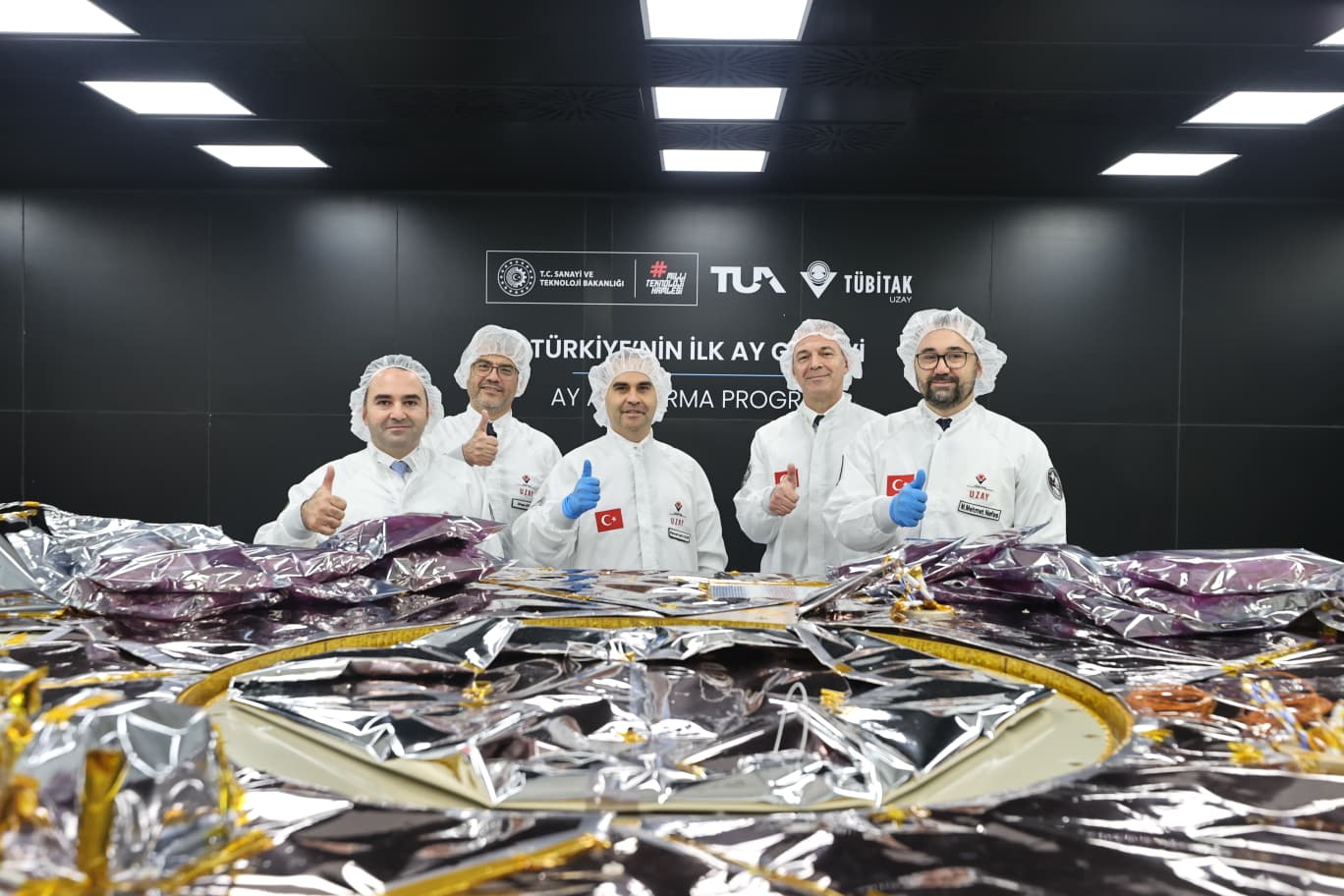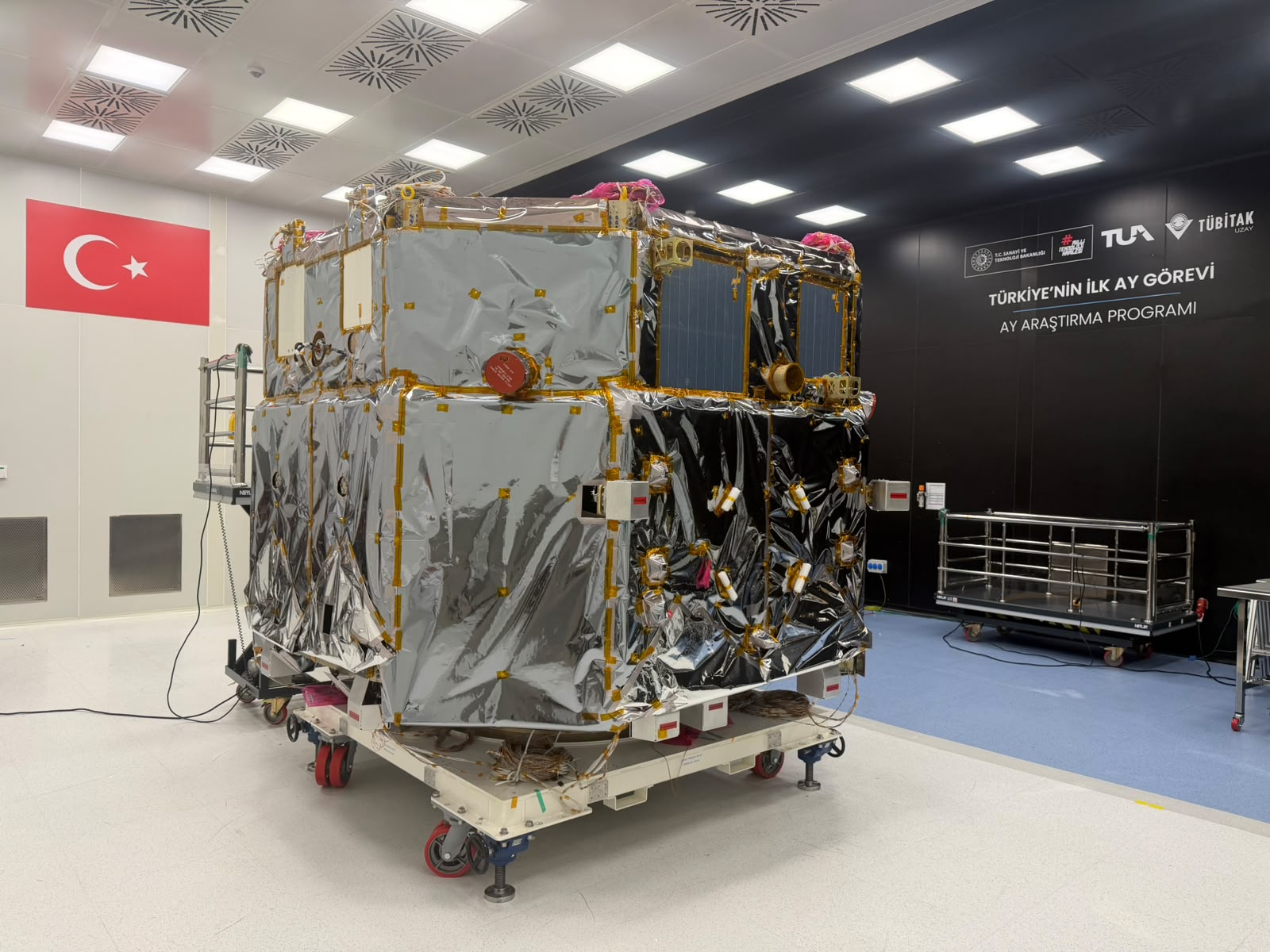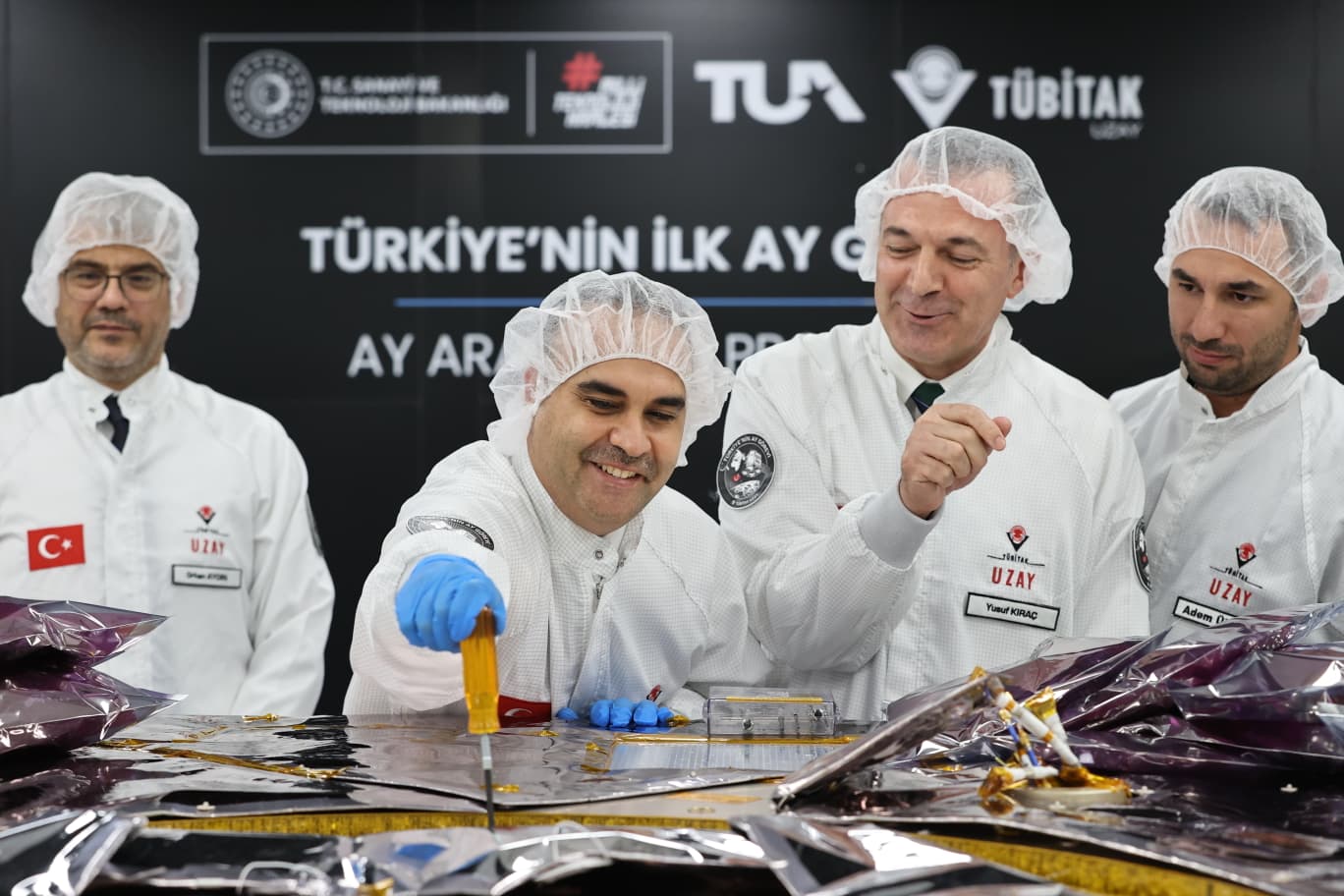

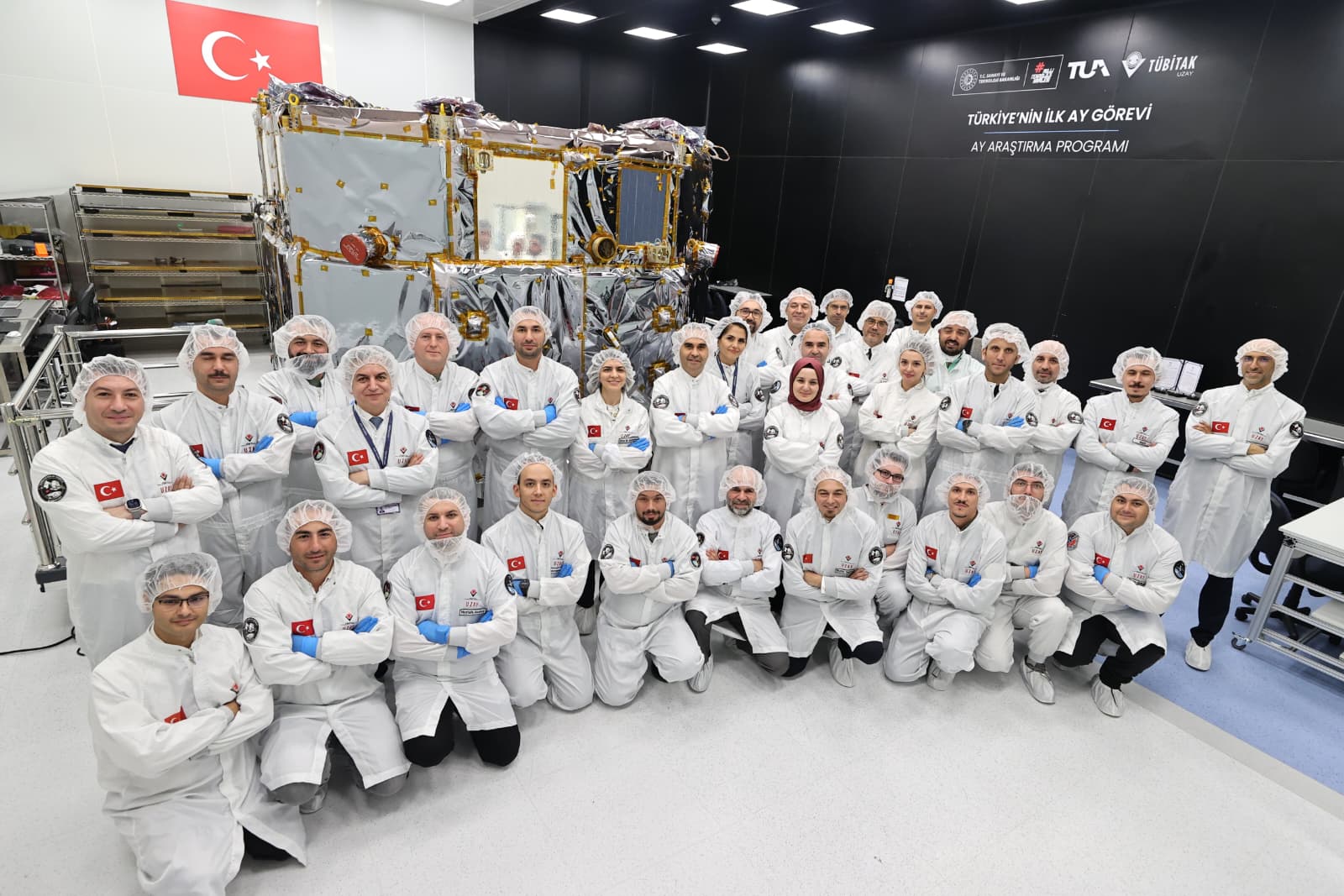
The manufacturing, assembly, and integration phases of the Lunar Spacecraft, developed by TÜBİTAK UZAY for Türkiye’s first lunar mission, have been successfully concluded. The spacecraft with a domestic content exceeding 80 percent is targeted for launch in the first half of 2027.
A critical milestone has been surpassed in the Lunar Research Program, executed within the National Space Program. Following the completion of the manufacturing, assembly, and integration activities by TÜBİTAK UZAY, the Lunar Spacecraft has been declared ready for the system-level environmental testing campaign.
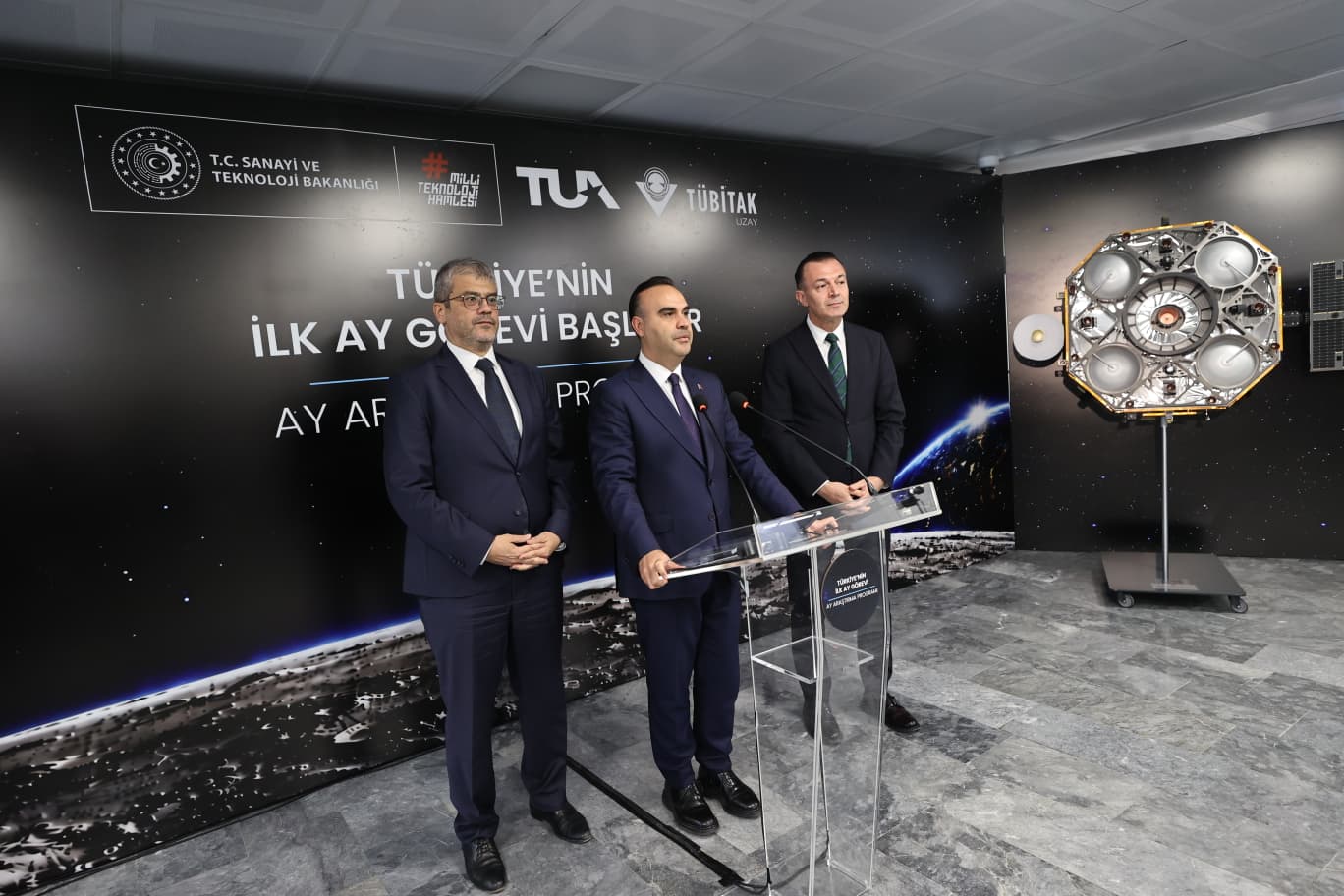
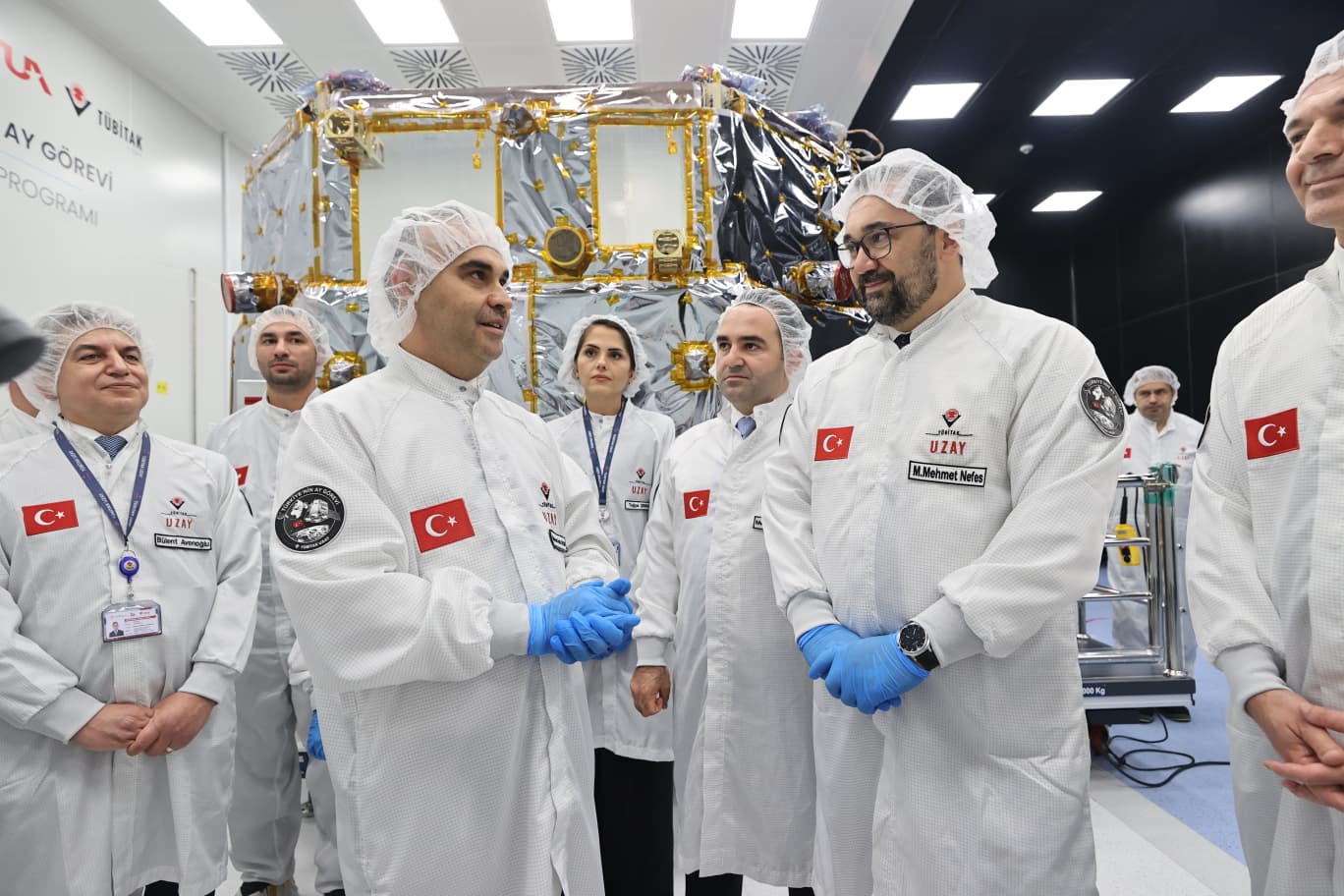
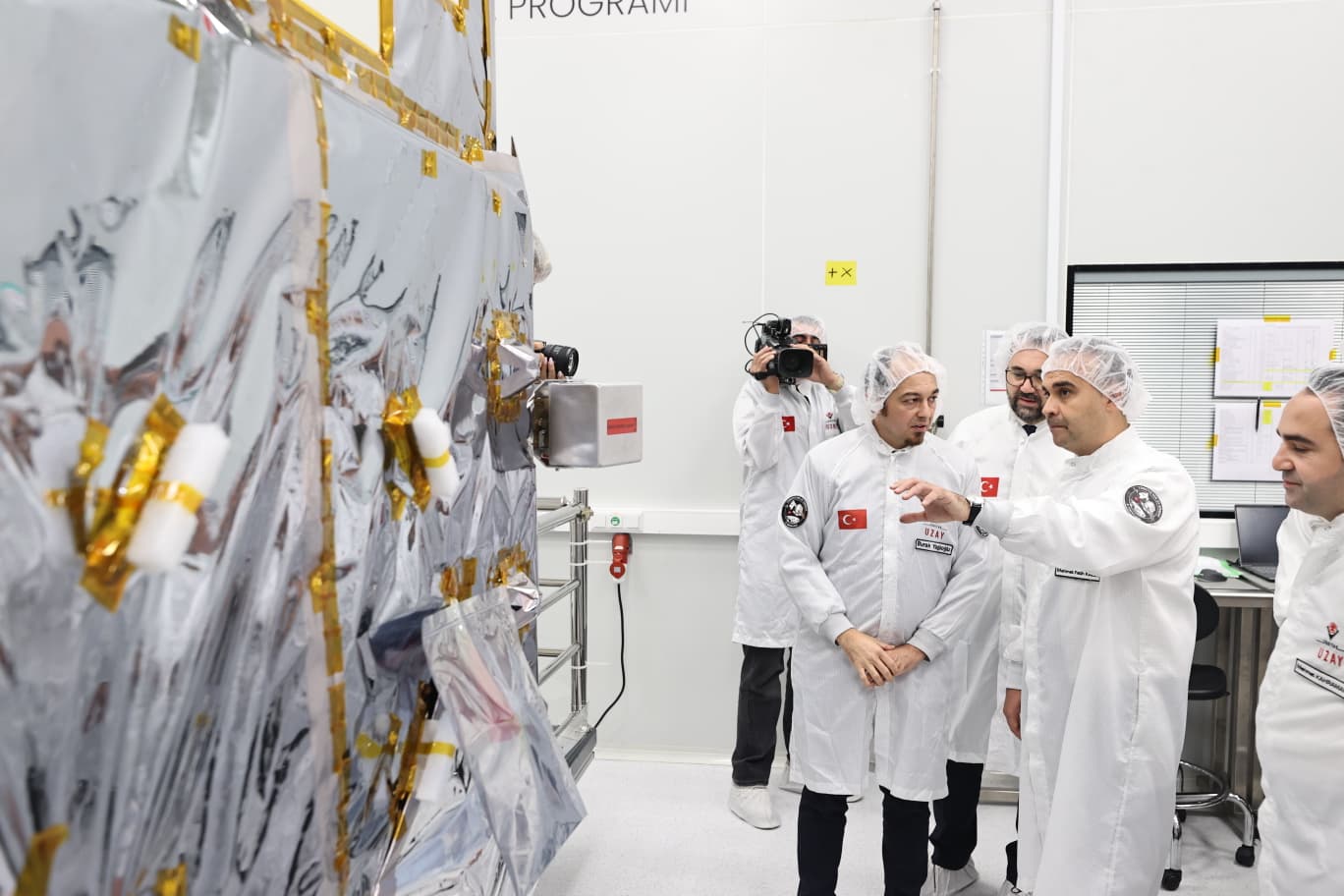
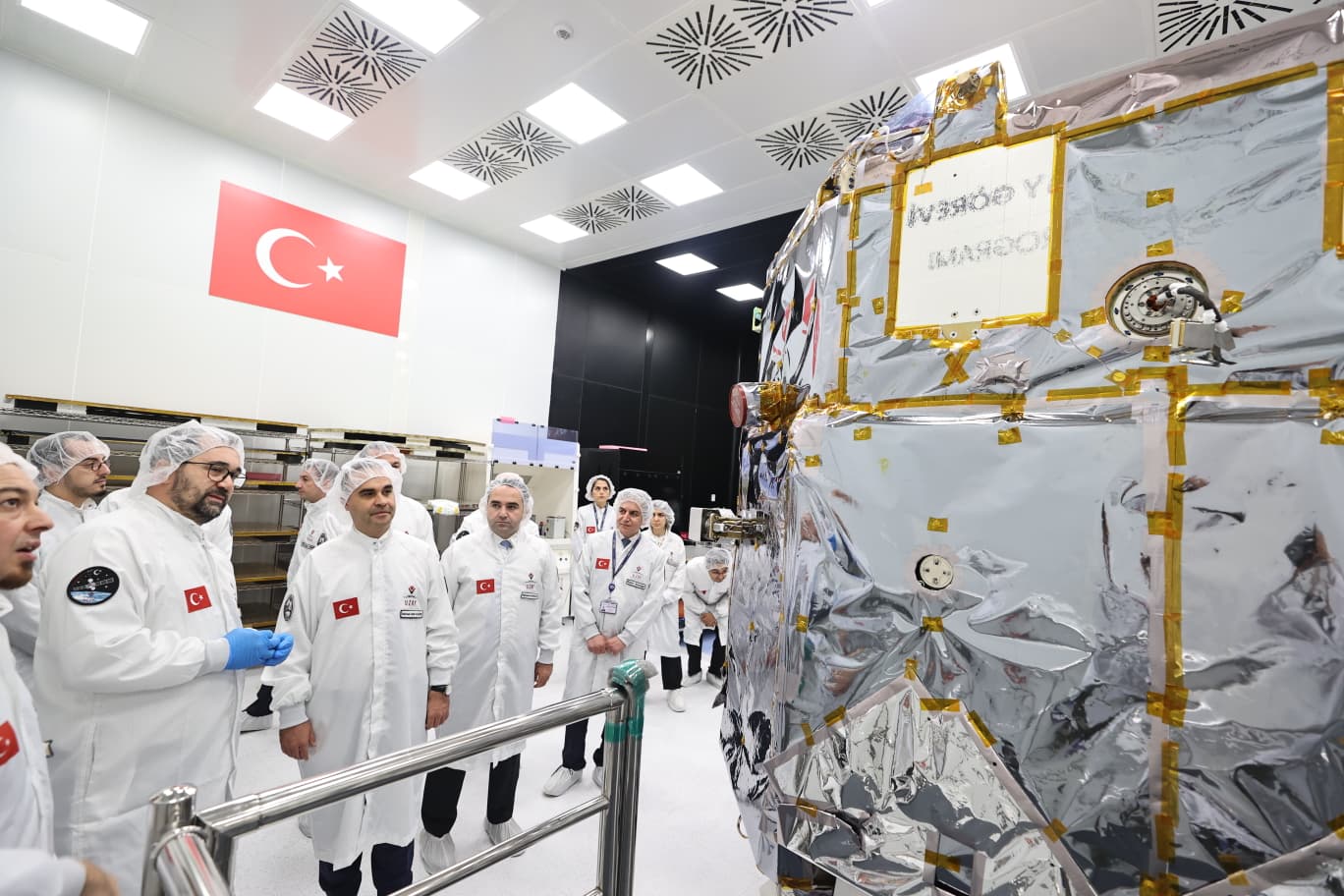
The Lunar Spacecraft was formally introduced to the public during a press conference held at the TÜBİTAK UZAY (OPMER) facilities on September 14, 2026, with the participation of Mehmet Fatih Kacır, the Minister of Industry and Technology.
Basın toplantısında Türkiye’nin ilk derin uzay görevinde ulaşılan aşamaya ilişkin değerlendirmelerde bulunan Bakan Kacır, çevresel test sürecine geçilmesinin Türkiye’nin Ay’a erişim hedefi açısından önemli bir eşik olduğunu vurguladı.
Scientific Operations in Lunar Orbit
Türkiye, Ay Araştırma Programı kapsamında TÜBİTAK UZAY yürütücülüğünde sürdürülen Türkiye’nin Ay Görevi ile yalnızca Ay’a erişmeyi değil, aynı zamanda derin uzayda görev ve bilimsel keşif gerçekleştirme kabiliyeti kazanmayı hedefliyor.
2027 yılının ilk yarısında fırlatılması planlanan uzay aracının, yaklaşık iki aylık yolculuğunun ardından Ay yüzeyinden yaklaşık 100 kilometre irtifadaki kutupsal görev yörüngesine ulaşması öngörülüyor. Uzay aracı, Ay yörüngesinde en az üç ay boyunca bilimsel ve operasyonel faaliyetlerini sürdürecek. Görev performansına bağlı olarak operasyon süresi 1,5 yıla kadar uzatılabilecek.
Following the conclusion of the scientific exploration phase, the spacecraft will be guided toward the lunar surface through controlled deorbit maneuvers executed utilizing its propulsion systems including domestic Hybrid Propulsion System.
Lunar Spacecraft to be Subjected to Rigorous Environmental Testing
TÜBİTAK UZAY OPMER tesisinde üretim, montaj ve entegrasyon faaliyetleri tamamlanan Ay Uzay Aracı, TÜBİTAK UZAY uzmanları tarafından sistem seviyesi çevresel testlerinin gerçekleştirilmesi amacıyla TUSAŞ Uzay Sistemleri Entegrasyon ve Test Merkezi’ne (USET) taşındı.
The spacecraft with a launch mass of approximately 3.5 tons will undergo rigorous validation under system-level environmental tests against the extreme conditions that it will encounter during launch and in the space environment. During the testing campaign, the spacecraft’s structural integrity against vibration and dynamic loads, as well as its performance under the extreme thermal and vacuum conditions of space, will be verified. Thermal vacuum (TVAC), structural, and electromagnetic compatibility (EMC) tests will ensure that all spacecraft subsystems operate seamlessly together under simulated mission conditions.
Çevresel testlerin ardından Ay Uzay Aracı, fırlatma öncesindeki son kontrol ve hazırlıkların gerçekleştirilmesi amacıyla TÜBİTAK UZAY’ın Orta Doğu Teknik Üniversitesi (ODTÜ) yerleşkesinde yapımı devam eden temiz oda ve entegrasyon merkezine getirilecek. Nihai hazırlıkların tamamlanmasının ardından ise uzay aracının ABD’deki Cape Canaveral’a sevk edilmesi planlanıyor.
56 out of 65 Subsystems Developed Domestically
Developed by Turkish engineers with more than 80 percent domestic content, the Lunar Spacecraft will extend Türkiye’s accumulated engineering heritage in satellite technologies to deep space.
Görev boyunca birlikte çalışacak toplam 65 ekipmanın 56’sı yerli olarak geliştirildi. Uzay aracının ana taşıyıcı yapısı, 24 yapısal paneli ile yüzlerce yapısal, ısıl ve kablaj bileşeni de yerli imkânlarla tasarlanarak üretildi.
The domestic systems utilized on the Lunar Spacecraft include spacecraft management equipment, payload interface equipment, chemical propulsion interface equipment, temperature monitoring interface equipment, power conditioning and distribution equipment (PCDU), S and X-Band communication systems (receivers and transmitters, patch and horn antennas, low noise amplifiers, etc.), reaction wheels, inertial measurement units (IMU), flight harness, fixed solar arrays, video cameras, and a vision-based navigation system.
Technological Heritage Extending from İMECE and TÜRKSAT 6A to Deep Space
Ay Uzay Aracı’nın geliştirilmesinde, Türkiye’nin önceki millî uydu projeleri kapsamında kazandığı tasarım, üretim, entegrasyon, test ve operasyon tecrübesinden yararlanıldı.
Specifically, the technological know-how derived from the flight computers, communication architectures, power units, thermal control systems, control interface units, and attitude determination equipment developed for the İMECE and TÜRKSAT 6A projects formed the foundational baseline for the platform developed for the lunar mission.
The TstarD-100, deep-space customized variant of TÜBİTAK UZAY’s Tstar platform family, will function in an integrated manner to execute core operations such as power management, telecommunications, flight management, attitude and orbit control (AOCS), and thermal control.
Scientific Exploration and International Collaborations
The Turkish Lunar Mission aims to generate unique scientific data regarding the Moon and its environment enabling significant scientific exploration, in addition to leveraging deep space operational capabilities of Türkiye. In this context, the spacecraft will operate as a high-resolution lunar water cycle observatory in Lunar orbit.
As part of the mission architecture, the Lunar Spacecraft will carry four scientific payloads into lunar orbit, comprising two developed domestically and two via international partnerships.
The Indigenous Radiation Calorimeter and Radiation Dosimeter will characterize the radiation environment in the lunar orbit.
The Lunar Neutral Particle Telescope, ile Güneş rüzgârlarının Ay yüzeyiyle etkileşimi, Ay’daki su oluşum mekanizmaları ve Ay’ın yerel manyetik alanlarına ilişkin veriler toplanacak.
The Lunar Narrow Field of View Radiometer, developed by China’s Shenzhen University, will be utilized to investigate the albedo properties, temperature distribution, and physical parameters of the lunar surface.
Görev kapsamında elde edilecek bilimsel verilerin Türkiye’deki akademisyenlerin ve üniversitelerin yanı sıra uluslararası araştırmacıların çalışmalarına da katkı sağlaması hedefleniyor. Böylece Türkiye, Ay’a erişim ve derin uzay operasyon kabiliyeti kazanmasının yanı sıra Ay araştırmalarına yönelik özgün bilimsel veri üreten sayılı ülke arasında yer almayı amaçlıyor.
Türkiye Extends its Space Technology Heritage to Deep Space
Türkiye’nin ilk derin uzay göreviyle bu alanda ihtiyaç duyulan yetişmiş insan kaynağı, altyapı, sistem mühendisliği yetkinliğinin ve operasyon tecrübesinin geliştirilmesi amaçlanıyor.
With the launch of the Lunar Spacecraft, Türkiye’s extensive space technology heritage, accumulated through national satellite projects like BİLSAT, RASAT, GÖKTÜRK-2, İMECE and TÜRKSAT 6A, will be deployed into deep space for the very first time with a lunar mission.
Türkiye’nin Ay Görevi kapsamında kazanılacak teknoloji ve operasyon kabiliyetlerinin, gelecekte gerçekleştireceğimiz daha ileri derin uzay görevleri için güçlü bir altyapı oluşturmasını hedefliyoruz.