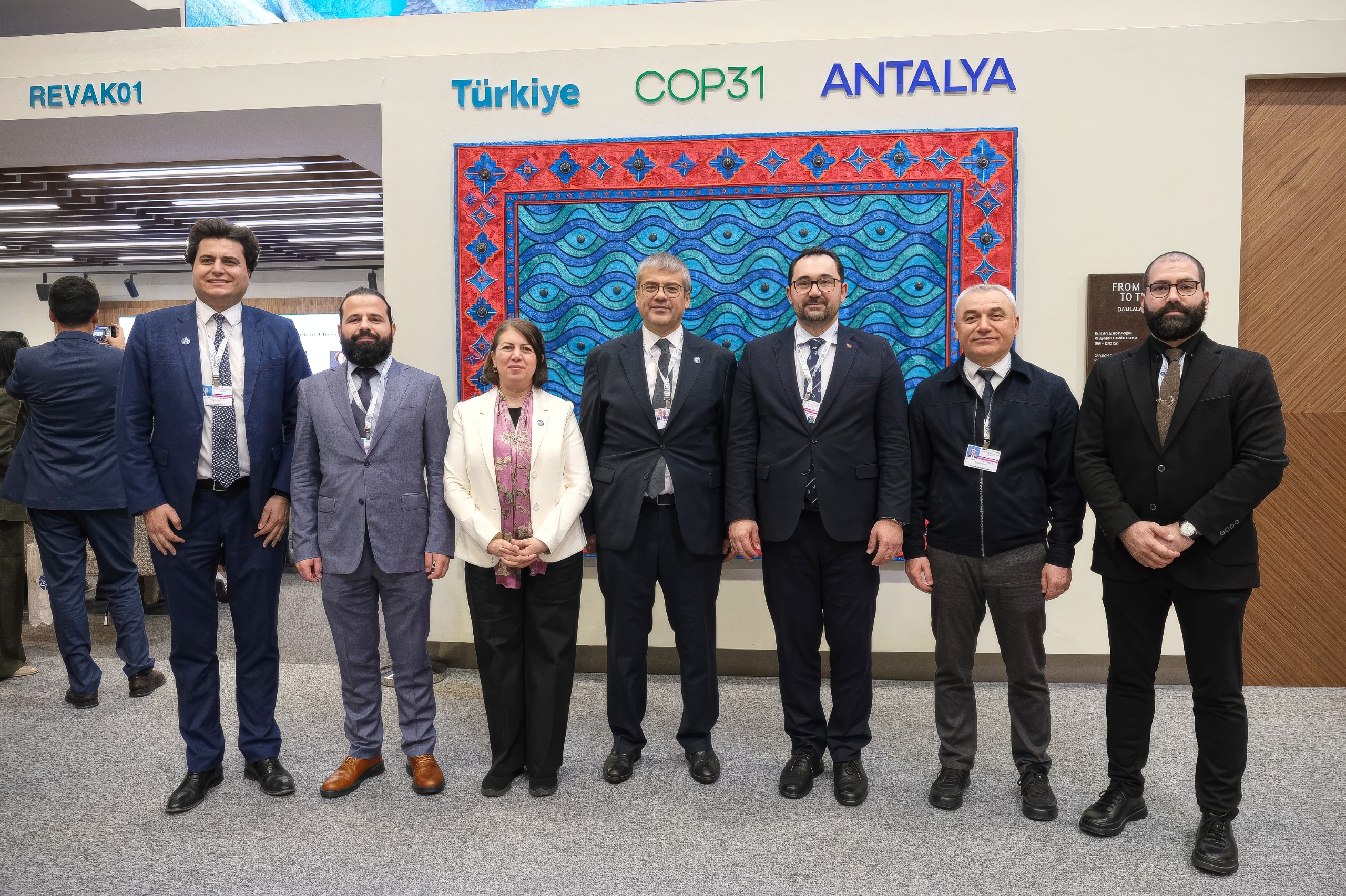

TÜBİTAK UZAY took part in the United Nations Climate Change Conference (COP31), held in Antalya, Türkiye, from 9 to 20 November 2026. The conference provided an opportunity to present Türkiye’s Earth observation capabilities, discuss satellite-based approaches to climate action and explore new international partnerships.
The 31st UN Climate Change Conference brought together senior government officials, scientists and representatives of international organisations from around the world to discuss global climate policy and action. As part of the conference programme on 16 and 17 November, TÜBİTAK UZAY participated in panel discussions and bilateral meetings, highlighting Türkiye’s advances in space technology and the growing role of satellite data in addressing climate challenges.
Earth Observation for Climate Action
Earth observation technologies, which play an important role in monitoring the impacts of climate change, sustainable natural resource management and disaster risk reduction, were among the key topics on the science and technology agenda at COP31.
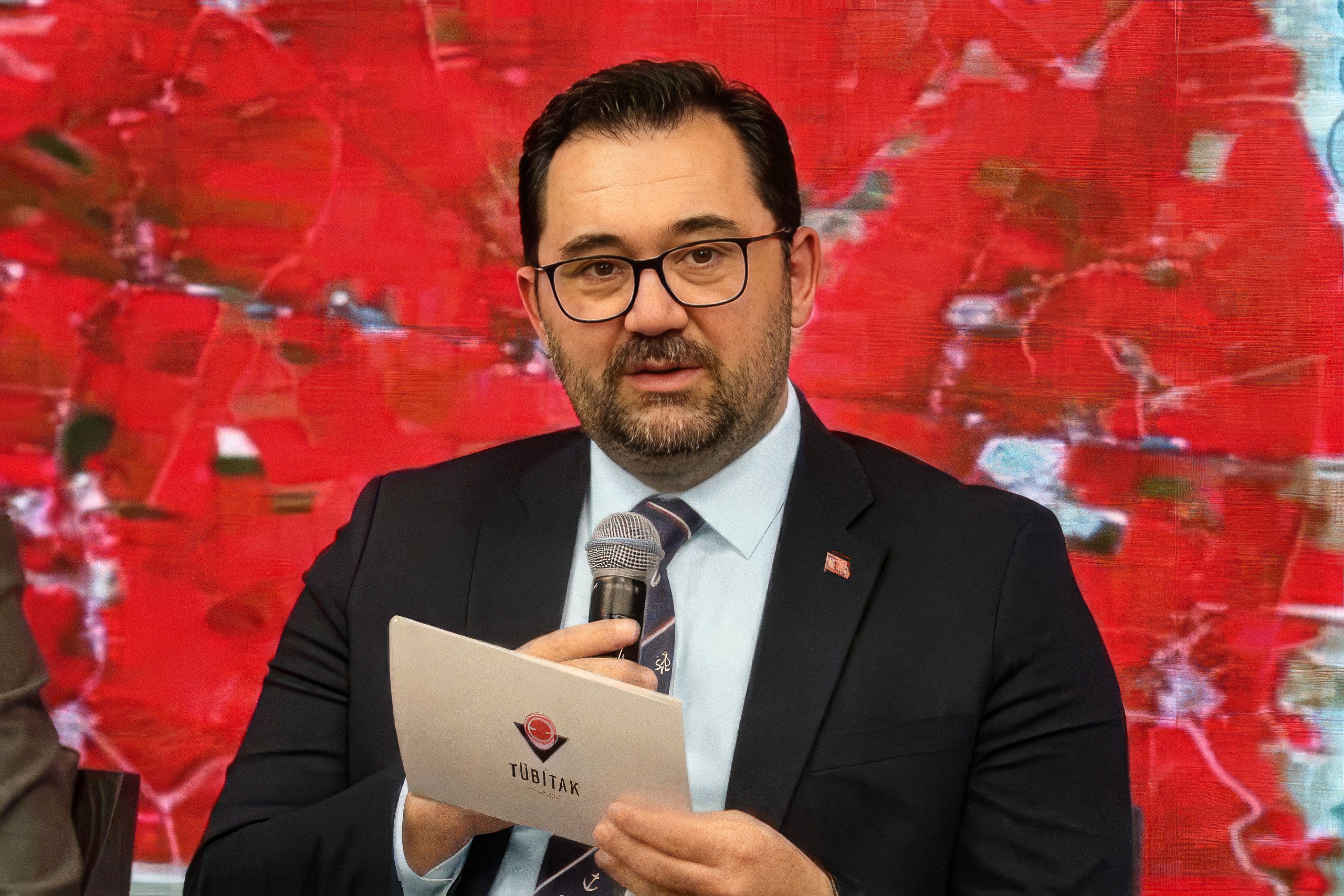
On 16 November, Dr. Kaan Kalkan, Head of the Remote Sensing Group at TÜBİTAK UZAY, presented Türkiye’s Earth observation capabilities and satellite data applications at the panel “From Space Observations to Climate Resilience,” organised by the European Commission at the European Union Pavilion. The panel addressed the use of satellite imagery in disaster management. TÜBİTAK UZAY’s HASSAS and AQUASCOPE projects were also discussed as examples of how Earth observation data supports agricultural production, water resource management and climate change adaptation.
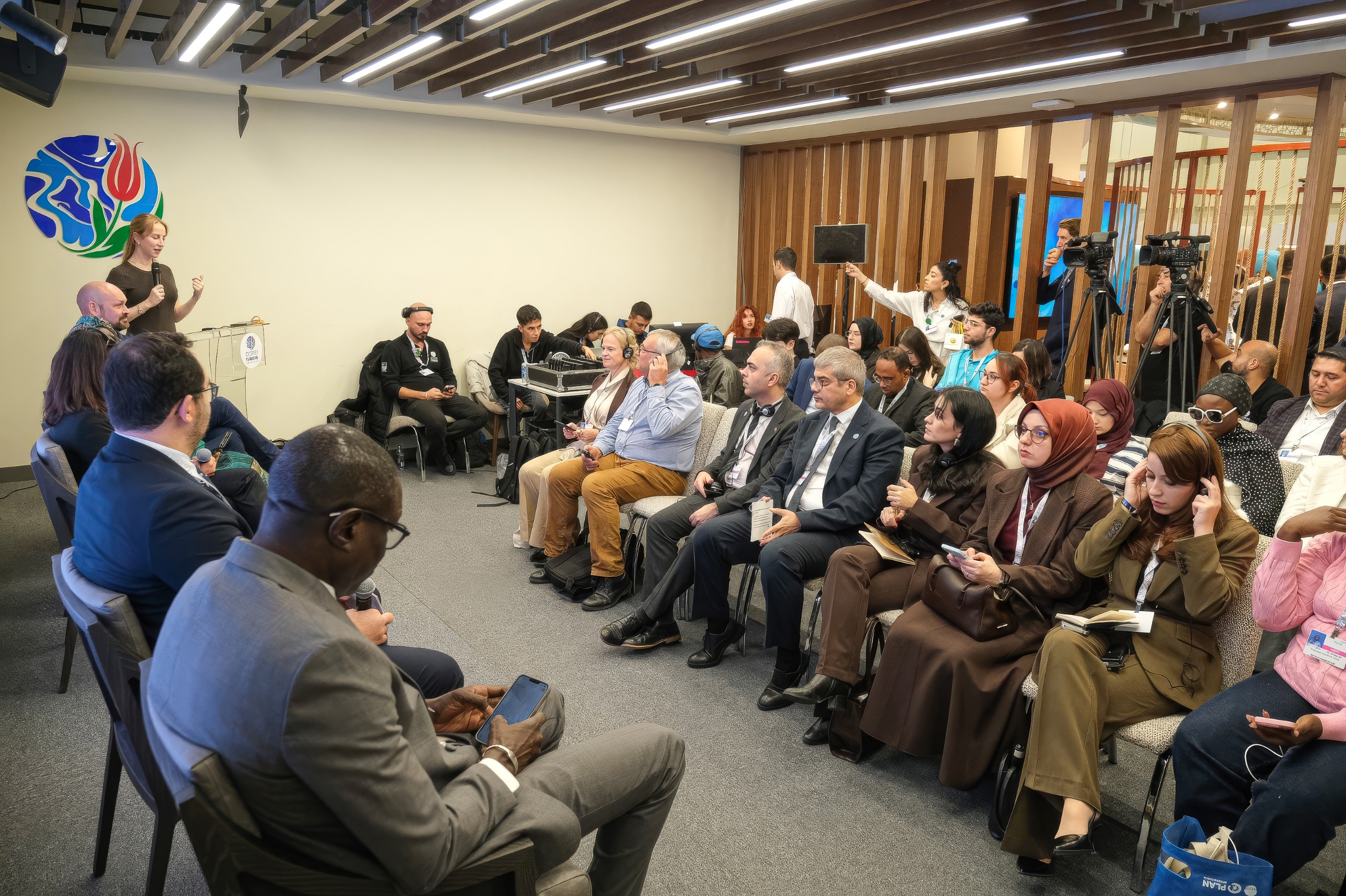
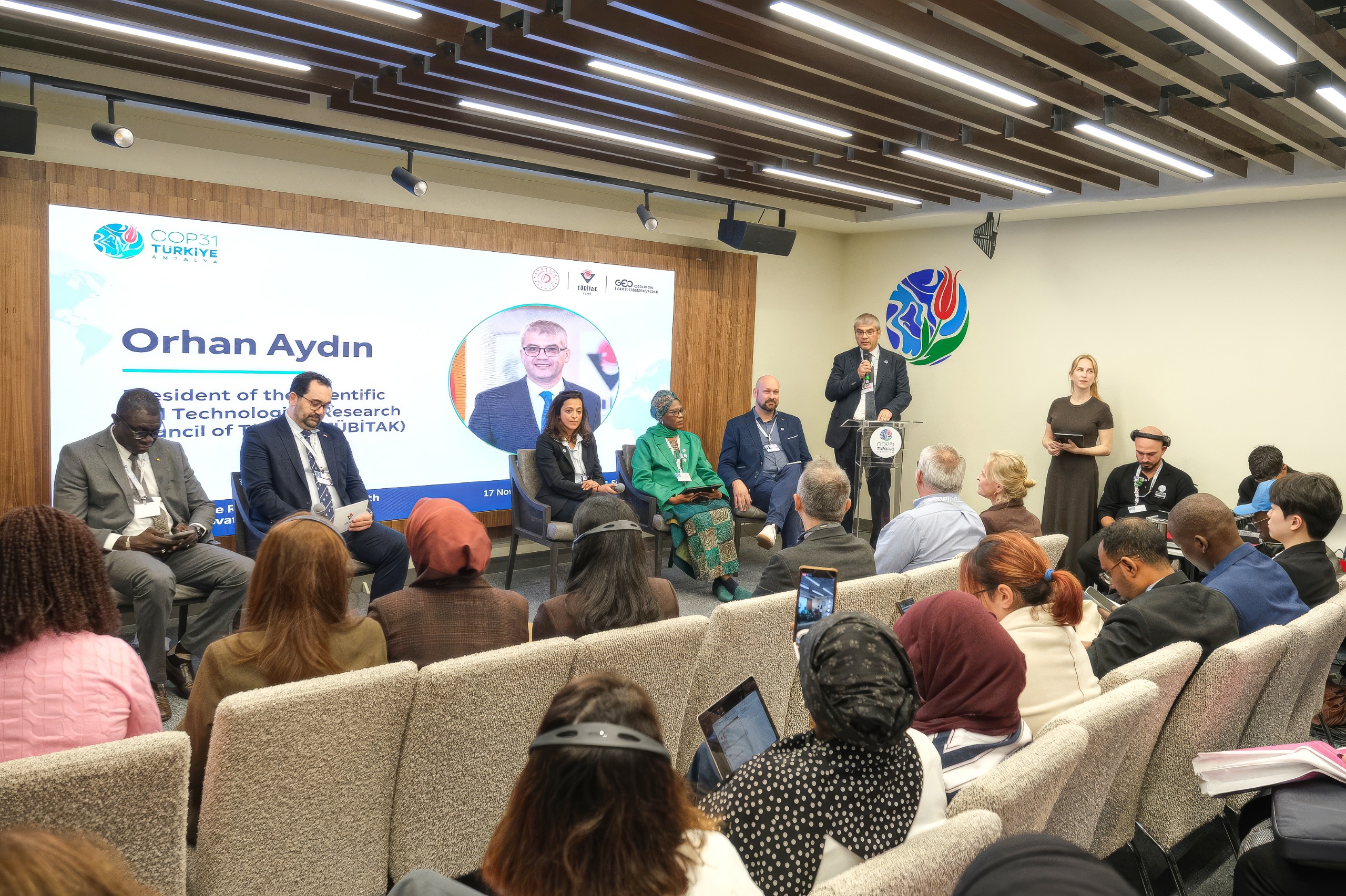
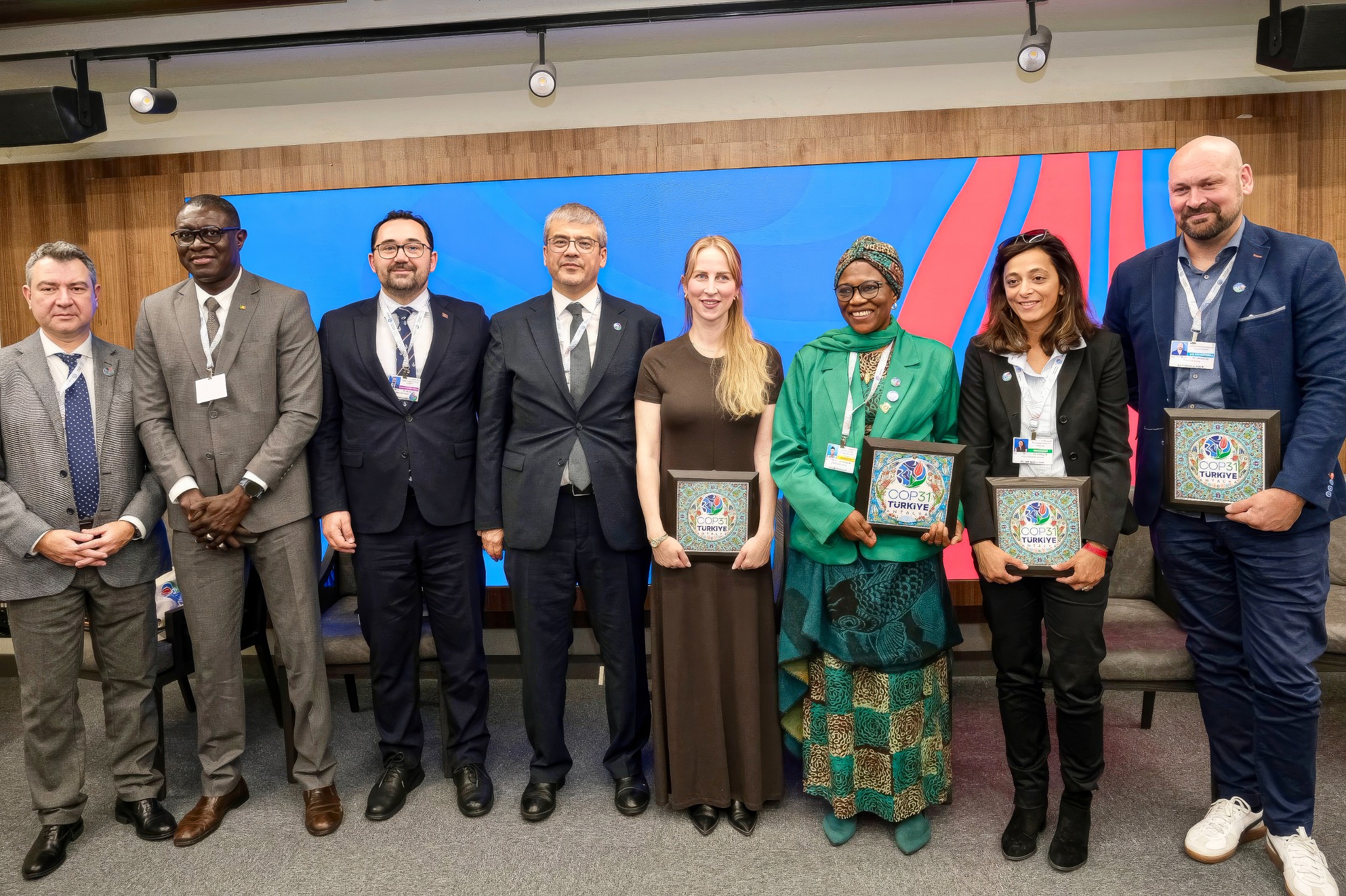
On 17 November, TÜBİTAK UZAY and the Group on Earth Observations (GEO) jointly organised a side event entitled “Advancing Climate Resilience through Earth Intelligence: Innovation, Data and Action” at the Türkiye Pavilion. The event opened with remarks by TÜBİTAK President Prof. Dr. Orhan Aydın. The panel, which featured TÜBİTAK UZAY Institute Director M. Mehmet Nefes as a speaker, highlighted the importance of satellite data and AI-based analysis for climate change adaptation, disaster risk reduction and strengthening climate resilience. The discussion also highlighted the added value of collaboration at local, regional and global levels, reaffirming that both Türkiye and TÜBİTAK UZAY are open to new opportunities for cooperation.
Exploring Space Technology Cooperation with El Salvador
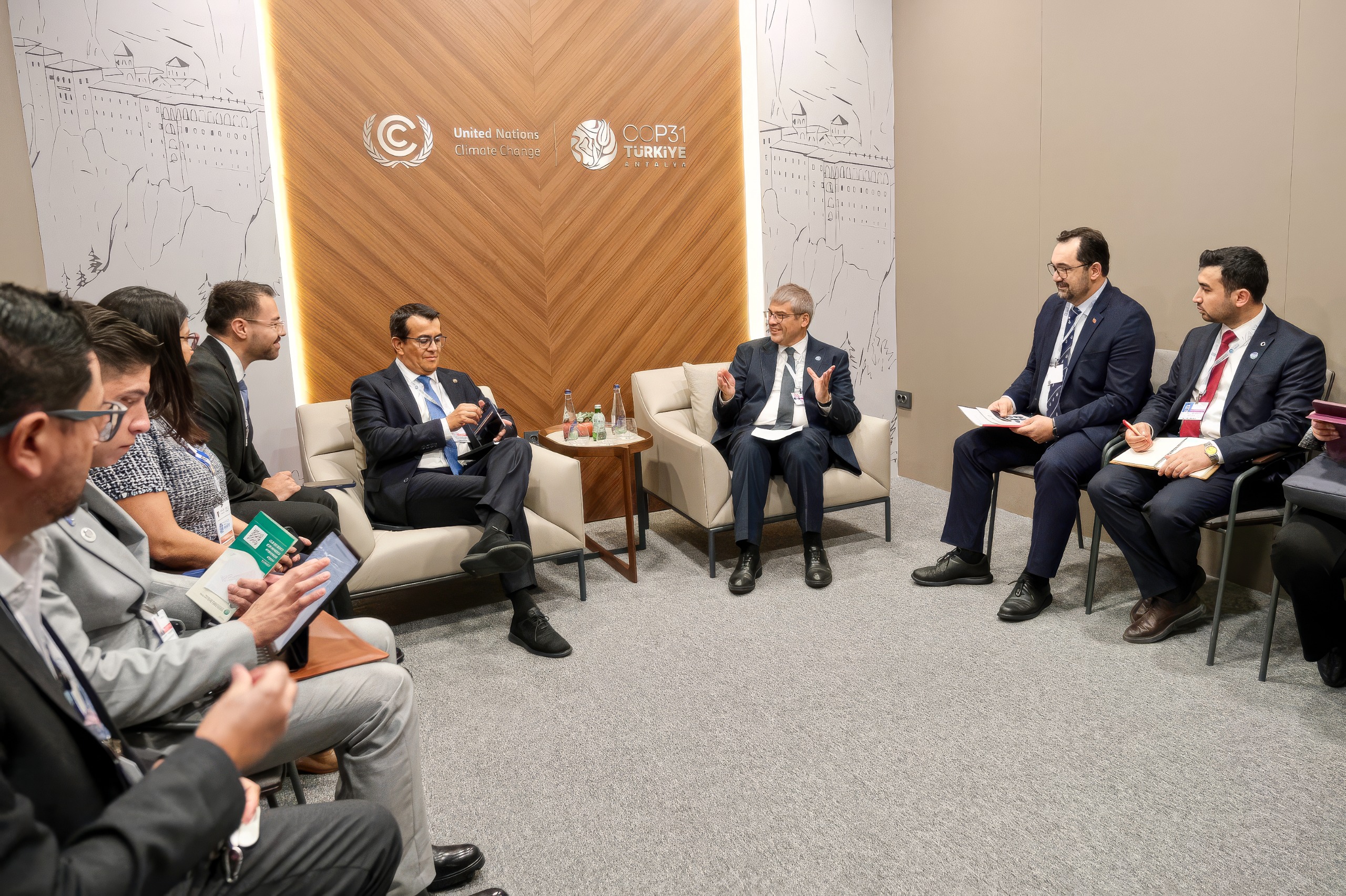
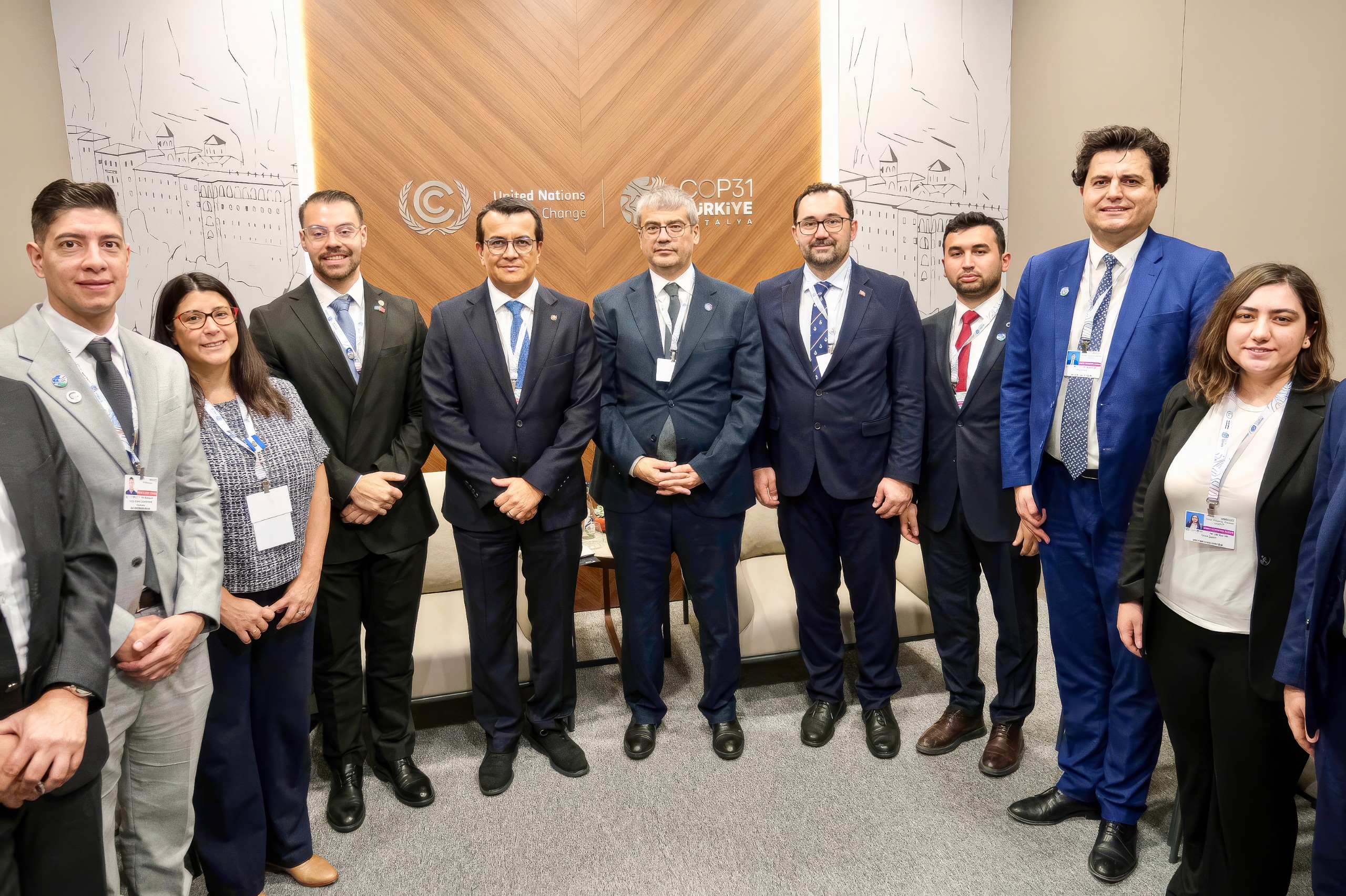
On the sidelines of COP31, TÜBİTAK President Prof. Dr. Orhan Aydın met with El Salvador’s Minister of Environment and Natural Resources, Fernando Andrés López Larreynaga, and his delegation on 17 November.
TÜBİTAK UZAY Institute Director M. Mehmet Nefes, Head of the Remote Sensing Group Dr. Kaan Kalkan and Aziz Koru, Senior Chief Researcher in the Business Development and External Relations Group, attended the meeting. The discussions centred on potential cooperation in satellite technologies, disaster management and environmental monitoring.
During the meeting, Nefes provided an overview of TÜBİTAK UZAY’s satellite projects and technical infrastructure, introducing the TstarC-100Next-Generation Microsatellite Platform and the GEZGİN-1 Satellite Project based on this platform. Nefes also presented the GEZGİN Satellite Imagery Portaland noted that the Institute’s engineering expertise and existing infrastructure could be used to support joint projects between the two countries.
Minister López Larreynaga provided an overview of CAREY, El Salvador’s first satellite mission, and expressed the country’s interest in international partnerships that would facilitate access to advanced technologies and support the use of satellite data for environmental monitoring.
The two sides explored potential areas of collaboration in satellite development, remote sensing and satellite data applications. El Salvador’s Ambassador to Türkiye, Eduardo Alfonso G. Grande, was invited to visit TÜBİTAK UZAY and learn more about the Institute’s technological capabilities.
To mark the occasion, President Aydın presented Minister López Larreynaga with a model of İMECE, Türkiye’s first sub-meter-resolution Earth observation satellite developed by TÜBİTAK UZAY.
Drawing on our satellite development capabilities and scientific expertise in remote sensing, we aim to support climate action and sustainable development while building stronger international partnerships in space technology and its applications.